
The International Energy Agency (IEA) reports that buildings account for nearly 30% of global final energy consumption and more than a quarter of energy-related carbon dioxide emissions. These figures have elevated energy performance from a secondary consideration to a central component of modern building design. As environmental concerns, operational costs, and regulatory requirements continue to evolve, the relationship between architecture and energy engineering has become increasingly important.
Traditional design teams once focused primarily on aesthetics, structural integrity, and functional space planning. Today, energy specialists are involved much earlier in project development. Industry resources such as the Chester and Delaware County electricians highlight how technical expertise contributes to broader discussions about infrastructure planning, electrical system performance, and energy management throughout the building lifecycle.
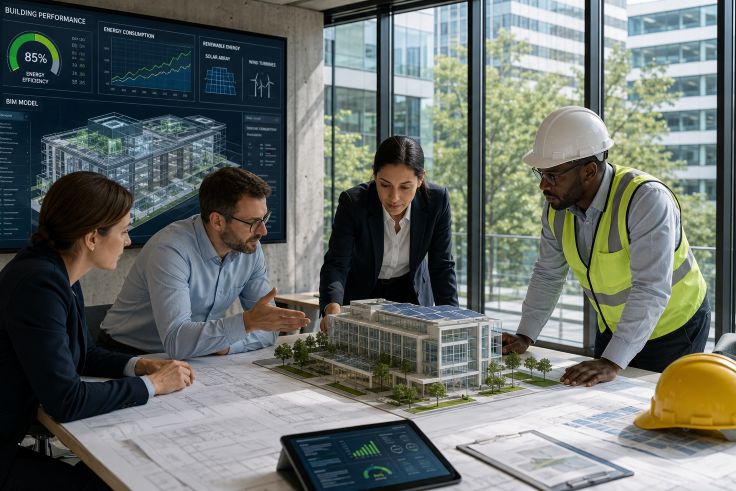
Traditional Architectural Priorities Versus Energy-Efficient Design
For much of modern construction history, architectural priorities centered on appearance, usability, durability, and cost control. While mechanical and electrical systems were essential, they were often integrated after major design decisions had already been made. This approach generally produced buildings that fulfilled operational requirements but sometimes overlooked long-term energy performance.
Supporters of traditional design philosophies argue that architecture should primarily focus on creating spaces that meet human needs. Visual appeal, occupant comfort, cultural relevance, and efficient use of space remain fundamental objectives. Buildings must function effectively for their users before additional considerations are introduced.
On the other hand, advocates of energy-conscious design argue that performance can no longer be separated from architecture itself. Research from the U.S. Department of Energy indicates that energy-efficient building strategies can significantly reduce operational costs while improving occupant comfort and indoor environmental quality. Modern projects increasingly treat energy consumption as a core design parameter rather than a technical afterthought.
The debate is no longer about choosing one priority over another. Instead, the challenge lies in balancing architectural creativity with measurable performance goals. Successful projects demonstrate that visually appealing structures can also achieve high levels of efficiency.
How Engineering Consultants Influence Project Outcomes
The growing complexity of building systems has expanded the role of engineering consultants across the construction industry. Energy engineers, electrical consultants, sustainability specialists, and commissioning professionals now contribute throughout planning, design, construction, and operational phases.
Proponents of early engineering involvement argue that technical expertise helps identify efficiency opportunities before costly decisions become difficult to change. Engineers can evaluate building orientation, energy demand forecasts, equipment sizing, electrical load requirements, and renewable energy integration during conceptual design.
Data from ASHRAE shows that integrated design approaches often lead to better-performing buildings because interdisciplinary teams collaborate from the earliest project stages. Rather than addressing energy challenges after construction documents are completed, teams can optimize systems collectively.
Critics occasionally raise concerns about increased upfront planning costs and longer design schedules. Bringing additional specialists into a project requires coordination, analysis, and consultation. However, many building owners view these investments as worthwhile because they can reduce operational expenses over decades of facility use.
The dialectical balance suggests that engineering consultants provide the greatest value when integrated strategically. Their role is not to override architectural objectives but to support informed decision-making that improves long-term building performance.
Integration of Electrical Systems and Sustainability Planning
Electrical systems have become a central element of sustainability planning. Modern buildings depend on sophisticated electrical infrastructure to support lighting, heating, cooling, automation, security, communications, and renewable energy technologies.
Historically, electrical design focused on providing reliable power distribution and code compliance. These responsibilities remain essential, yet modern sustainability goals require broader considerations. Engineers now evaluate energy monitoring systems, smart controls, battery storage solutions, electric vehicle charging infrastructure, and renewable energy integration.
Research published by the National Renewable Energy Laboratory (NREL) indicates that smart building technologies can significantly improve energy management by providing real-time operational data. Building owners can identify inefficiencies, adjust system performance, and reduce waste through data-driven decision-making.
Some industry professionals caution that advanced technologies can introduce complexity. Smart systems require maintenance, cybersecurity planning, and skilled operators. Without proper management, technological investments may fail to deliver anticipated benefits.
Nevertheless, the broader trend continues toward greater system integration. Electrical engineering increasingly serves as a bridge connecting sustainability objectives with practical building operations. Energy efficiency measures are most effective when supported by reliable infrastructure and intelligent controls.
The Role of Technical Professionals Within Broader Construction Ecosystems
Modern construction projects involve a diverse network of specialists. Architects, structural engineers, mechanical engineers, electrical professionals, project managers, contractors, sustainability consultants, and facility operators each contribute unique expertise.
Technical professionals play a critical role in translating conceptual goals into operational realities. Energy models, electrical distribution plans, load calculations, equipment specifications, and commissioning processes all influence whether a building performs as intended.
The contribution of skilled electricians and engineering teams extends beyond installation activities. Their practical understanding of field conditions often helps identify potential challenges before they become costly problems. Collaboration between design professionals and field experts improves constructability, reliability, and long-term maintenance outcomes.
Experts from the International Code Council (ICC) note that increasingly complex building codes and performance standards require close coordination among all stakeholders. Compliance with evolving energy regulations depends on effective communication across disciplines.
This collaborative ecosystem reflects a broader industry shift. Buildings are no longer viewed simply as physical structures. They are increasingly understood as interconnected systems that must operate efficiently, safely, and sustainably throughout their lifespan.
READ ALSO: Roles and Responsibilities of Architects in Construction Projects
Future Outlook for Architecture and Energy Collaboration
Looking ahead, the relationship between architecture and energy engineering is expected to deepen further. Several emerging trends are influencing how future buildings will be designed and operated.
Building information modeling (BIM), digital twins, artificial intelligence, and advanced analytics are expanding opportunities for integrated planning. These technologies allow teams to simulate performance outcomes before construction begins. Research from the World Green Building Council suggests that data-driven design processes can help improve resource efficiency and support long-term sustainability objectives.
Electrification is another major trend. As governments and industries pursue decarbonization goals, buildings are increasingly shifting away from fossil fuel-based systems. This transition places greater importance on electrical infrastructure, renewable energy integration, and energy storage technologies.
Final Thoughts
There are still challenges to address. Project budgets, workforce development, technology adoption, and regulatory complexity will continue to shape implementation strategies. Balancing innovation with practicality remains a key consideration for owners and design teams.
Ultimately, the debate between traditional architectural priorities and energy-focused engineering is evolving into a collaborative partnership. Modern buildings must satisfy functional, aesthetic, environmental, and operational objectives simultaneously. Energy engineers, electrical specialists, sustainability consultants, and construction professionals each contribute essential expertise to this process.
As the built environment becomes increasingly interconnected, successful projects will depend on stronger cooperation between architectural vision and engineering performance. This collaborative approach is likely to define the next generation of resilient, efficient, and sustainable buildings.