
Why Some Modern Door Designs Cause Lock Failures: Design Trade-Offs Observed in Residential Entryways
Data from National Association of Home Builders (NAHB) research shows that homeowners continue to prioritize modern aesthetics, larger openings, and customized entry features in residential construction. Minimalist architecture, oversized pivot doors, flush surfaces, and mixed-material entrances have become increasingly common in newer homes. These design choices often create visually striking spaces, but they can also introduce practical challenges that affect everyday functionality.
Contemporary residential design increasingly combines visual simplicity with advanced materials and technology. Homeowners often seek entryways that appear seamless and elegant while maintaining convenience and safety. Sources discussing reliable lock repair frequently note that changing architectural preferences can sometimes create unintended stress on locking systems, particularly when door construction differs from traditional standards.
Modern Residential Design and the Appeal of Contemporary Entryways
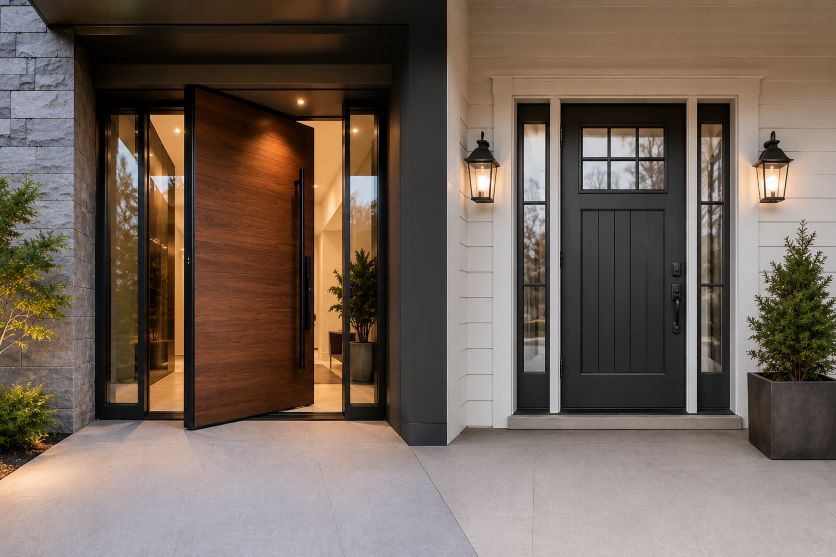
Modern residential architecture has shifted away from purely functional door designs toward entry systems that contribute to the overall identity of a home. Large glass panels, concealed frames, steel accents, and oversized wood surfaces are increasingly viewed as design elements rather than simple barriers between indoor and outdoor spaces.
Architects and designers value these features because they create openness and visual continuity. A flush entrance can make walls appear cleaner. Wide pivot doors can establish a stronger first impression. Mixed materials can introduce texture and contrast without excessive ornamentation.
Research from American Institute of Architects (AIA) indicates continued interest in modern design features that maximize natural light and simplify visual complexity. Contemporary entryways often align with these goals.
The argument supporting these design trends is understandable. Modern doors provide aesthetic value, create architectural character, and contribute to the overall experience of a space.
However, architectural decisions often involve trade-offs.
Where Design Goals Begin Competing With Mechanical Reality
Doors function as moving structures rather than static decorative pieces. Every door relies on alignment, balance, material stability, and hardware compatibility. When aesthetics become the primary focus, certain practical considerations may receive less attention.
This creates a tension between appearance and mechanical performance.
Experts at The Door and Hardware Institute (DHI) note that door hardware systems are designed around specific dimensions, weight tolerances, and installation requirements. Altering these factors can affect long-term performance.
Several common design choices illustrate this challenge.
Material Expansion and Contraction
Natural wood remains popular in modern residential construction because of its appearance and warmth. However, wood reacts to humidity and temperature changes.
United States Forest Service studies show that wood naturally expands and contracts depending on environmental conditions. Slight movement may appear insignificant, but even small dimensional changes can affect door alignment.
When a door shifts slightly, lock components may no longer line up perfectly with strike plates or latches.
Homeowners sometimes experience symptoms such as:
- Difficulty turning keys
- Resistance when locking doors
- Latches failing to engage completely
- Doors rubbing against frames
These issues may appear to be lock defects when the root cause is structural movement.
Door Thickness and Hardware Compatibility
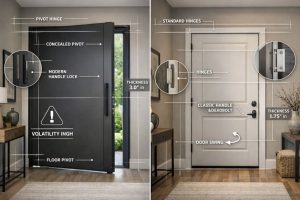
Modern designs occasionally use thicker doors for visual impact or improved insulation performance.
While thicker doors may provide advantages in appearance and thermal efficiency, standard locking systems are frequently engineered around conventional dimensions.
Research from Builders Hardware Manufacturers Association (BHMA) indicates that hardware compatibility remains an important consideration during specification and installation.
When hardware and door dimensions do not match properly, several problems can emerge:
- Improper latch depth
- Reduced lock engagement
- Internal component strain
- Difficulty operating handles and deadbolts
Mechanical stress may gradually increase wear over time.
Weight and Structural Pressure
Oversized entry doors have become a defining feature in many contemporary homes.
Large pivot systems can create dramatic entrances, but greater size typically means greater weight.
Engineers note that increased weight places additional pressure on hinges, pivot mechanisms, frames, and locking points.
Even a slight downward movement caused by gravity can influence hardware alignment.
Homeowners may initially notice minor symptoms such as sticking or uneven closing. Over time, these small changes can evolve into recurring locking issues.
Examples of Lock Performance Challenges in Modern Entryways
Lock failures rarely happen because one component suddenly stops functioning. Performance issues often develop gradually.
A minimalist steel-and-glass entrance may initially operate smoothly after installation. Several months later, seasonal expansion or structural settling can slightly alter positioning.
A pivot door may maintain visual appeal while experiencing small alignment shifts that affect deadbolt engagement.
Flush-mounted designs may reduce visible hardware, yet concealed components sometimes make maintenance and adjustments more complex.
International Code Council (ICC) guidance emphasizes the importance of maintaining operational performance in building components, especially those involved in security and accessibility functions.
Small differences measured in millimeters can influence how smoothly a locking system works.
Finding Balance Between Design and Security Functionality
The discussion should not suggest that modern doors create poor outcomes. Contemporary designs provide genuine architectural advantages and continue to shape residential construction trends.
The stronger argument involves balance rather than opposition.
Architects increasingly collaborate with hardware specialists during design stages because appearance and performance depend on each other. While moving through residential design decisions, selecting appropriate materials, accounting for climate conditions, and ensuring compatibility between doors and hardware can help reduce future concerns and improve long-term functionality.
Design professionals often recommend considering factors such as:
- Expected environmental exposure
- Door weight and support systems
- Material movement characteristics
- Hardware specifications
- Long-term maintenance requirements
Thinking about these factors early can help preserve both visual goals and security performance.
Proper lock maintenance, hardware adjustments, and periodic inspections may also help identify small issues before they become larger mechanical concerns.
Conclusion
Modern entryways represent a clear evolution in residential architecture. Clean lines, large surfaces, and innovative materials can create visually impressive spaces that reflect changing homeowner preferences.
Still, every design decision carries consequences. Data indicates that material behavior, alignment changes, weight distribution, and dimensional adjustments can influence long-term lock performance. A door may succeed aesthetically while introducing practical complications that become noticeable only through everyday use.
The most effective residential designs often recognize that security hardware is part of the architecture rather than an afterthought. Attractive entryways and dependable locking systems do not have to compete with one another. Thoughtful planning, sound hardware selection, and attention to long-term mechanical performance can support both visual design goals and dependable security function.

